 blog
blog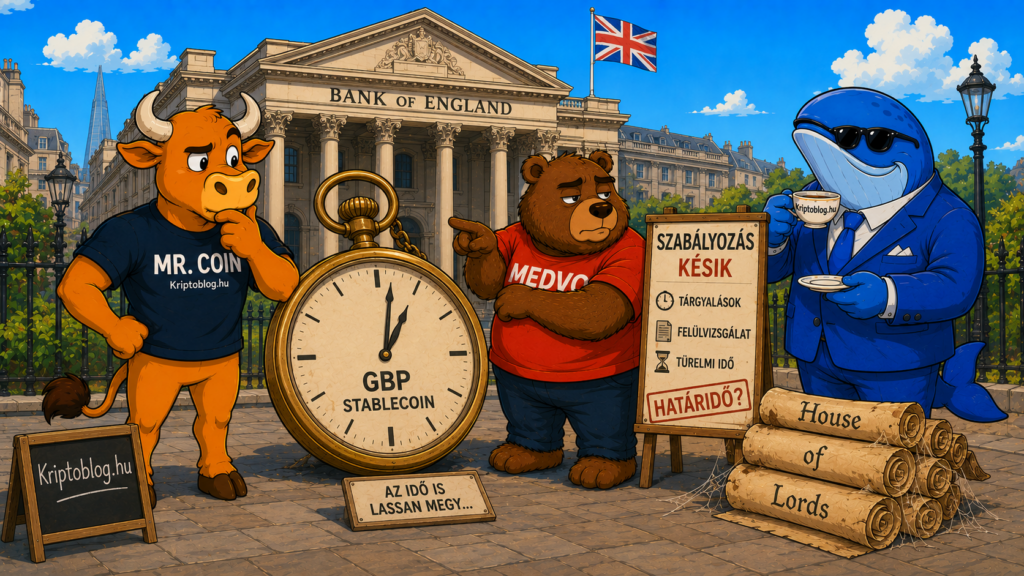
A szabályozási vákuum nem csupán adminisztratív akadály, hanem egy közvetlen versenyhátrány, amely szívhatja ki a likviditást a brit pénzügyi szektorból. Amikor a technológia gyorsasága és a törvényhozók lassúsága találkozik, a nemzet gazdasági érdekei veszélybe kerülhetnek. A brit Felsőház (House of Lords) legutóbbi jelentése szerint a szabályozási késlekedés gátolja a GBP-alapú stablecoinok piaci belépését, ami a globális kripto-piac felé irányuló tőkeáramlás egyik fő motorjává válhatna.
House of Lords Urges Immediate Regulatory Action
The British political elite has sent a clear message to monetary authorities: hesitation is no longer a neutral stance; it is actively harmful. As reported by Blockonomi, a committee within the House of Lords has urged regulators to avoid further delays in implementing final stablecoin frameworks. A central argument presented by the committee is that a well-regulated market for Pound Sterling (GBP) stablecoins could establish a payment infrastructure significantly faster and more cost-effective than existing traditional banking systems.
Analysis from Hybrid Horizon (HH) suggests that lawmakers are specifically concerned with the sluggishness of the regulatory process, emphasizing that technological evolution does not wait for political consensus. This tension highlights a critical friction point: the absence of clear frameworks creates uncertainty rather than security, which in turn prevents legitimate institutional capital from entering the UK market.
The Power of 1:1 Reserves and GBP-Based Potential
Stability is built on trust, and trust is built on collateral. The House of Lords committee strongly supports an approach where stablecoin issuances are backed by 1:1 full-value reserves. This requirement is not merely a technical detail but a cornerstone of market stability. According to Blockonomi, regulators are currently examining holding limits and the specific rules governing non-interest-bearing reserve assets.
Why does this matter for the UK economy? The total global crypto market capitalization has reached $2.40 trillion (per CoinGecko data), and within this ecosystem, stablecoin dominance is essential for maintaining liquidity. If the United Kingdom fails to provide a secure, GBP-based alternative, market liquidity will inevitably gravitate toward US dollar-based stablecoins. This shift could be interpreted as a form of "digital dollarization," potentially weakening the Pound's global significance in the digital economy.
The Bank of England’s Dilemma: Risk Management vs. Innovation
The Bank of England (BoE) is currently facing a delicate balancing act. A primary objective of the central bank is to maintain monetary stability; the extreme volatility or potential lack of backing in private-sector stablecoins poses a genuine risk to the stability of the broader financial system. Hybrid Horizon reports that regulators are considering strict limitations and holding caps to protect the traditional banking sector from crypto-market shocks.
However, lawmakers are questioning the wisdom of this heavy-handed approach: if restrictions are too stringent, will they stifle innovation? If they are too slow, will the opportunity vanish? The crux of the dilemma lies in avoiding the "gray zone" where users are left vulnerable due to a lack of oversight, while ensuring that overly rigid rules—such as those regarding non-interest-bearing reserve assets—do not diminish the economic attractiveness and liquidity of stablecoins. This directly impacts the dynamics of the $2.40 trillion global market, where efficiency and cost-effectiveness are the primary drivers.
Market Context: Global Liquidity and Regulatory Impact
To understand the weight of these UK decisions, one must look at the current market landscape. According to the latest CoinGecko data, Bitcoin (BTC) is trading at $66,952.00 with a market dominance of 56.0%. This indicates a highly concentrated market where stability relies heavily on Bitcoin and stablecoins. While the $2.40 trillion total market cap represents massive liquidity, this capital is constantly searching for the safest and most efficient stores of value and transaction tools.
If UK regulation succeeds, GBP-based stablecoins could integrate into daily payment processes, lowering transaction costs and increasing speed. If the regulatory vacuum persists, liquidity will bypass the UK in favor of the global, predominantly USD-based crypto ecosystem. This is not just a technological debate; it is a geopolitical and macroeconomic struggle for the financial infrastructure of the digital age.
Key Takeaways for Investors
For observers, this situation presents both opportunities and risks:
A befektetők számára: A szabályozási keretek kialakulása (különösen a 1:1 fedezet elismerése) hosszú távon növeli a biztonságot, de a rövid távú holding limits bevezetése korlátozhatja a kereskedési stratégiákat. Figyelni kell a Bank of England hivatalos kiadványait, mert bármilyen változás a fedezeti eszközökre vonatkozó szabályokban azonnali piaci mozgást indíthat el.
A vállalkozások és a fizetési szolgáltatók számára: A GBP-alapú stablecoinok megjelenése hatalmas piaci rést nyithat ki. Aki képes integrálni ezeket a gyors, olcsó digitális eszközöket a saját folyamataiba, az versenyelőnyre teszi magát a hagyományos banki átutalásokkal versenyező partnerekkel szemben.
Tanács: Ne tekintsünk a stablecoinokra csupán digitális dollárokként. Figyeljük a helyi (GBP) szabályozási környezetet, mert a szabályozási környezet határozza meg, hogy egy eszköz valódi pénzügyi eszközzé, vagy csak egy spekulatív elem trik.
Our own approach: we don't buy on the news, we buy on our theses. If someone believes that mobile crypto adoption is a long-term story that eventually plays out, then today's quiet price isn't alarming — it's more like opportunity. If someone doesn't believe it, no single feature announcement will convince them. Everyone decides this for themselves, at their own risk — our job is to ask the right questions precisely. Our own results have been mixed and probably will continue to be; we don't promise certain answers, only honest thinking.
The House of Lords' call to action addresses a timeless question: how can regulation support growth instead of hindering it? The goal is a system where 1:1 reserves guarantee security and GBP-based stablecoins modernize payment infrastructure. The Bank of England carries a heavy responsibility to find the "sweet spot" where monetary stability does not come at the expense of technological progress.
The coming months will be defined by the coordination between HM Treasury and the Bank of England. If regulation is swift and transparent, the United Kingdom could reassert itself as a global financial hub—this time, as a leader in the direction of digital capital.
Sources
- Blockonomi: UK House of Lords Pushes Bank of England on Stablecoin Rule Delays (2026. 06. 02.) forrás
- CoinGecko: Piaci adatok (BTC, ETH, Market Cap) (2026. 06. 02.)







Comments
Share your view: questions, corrections, and counterpoints are welcome. Comments are for constructive, useful discussion.