 blog
blog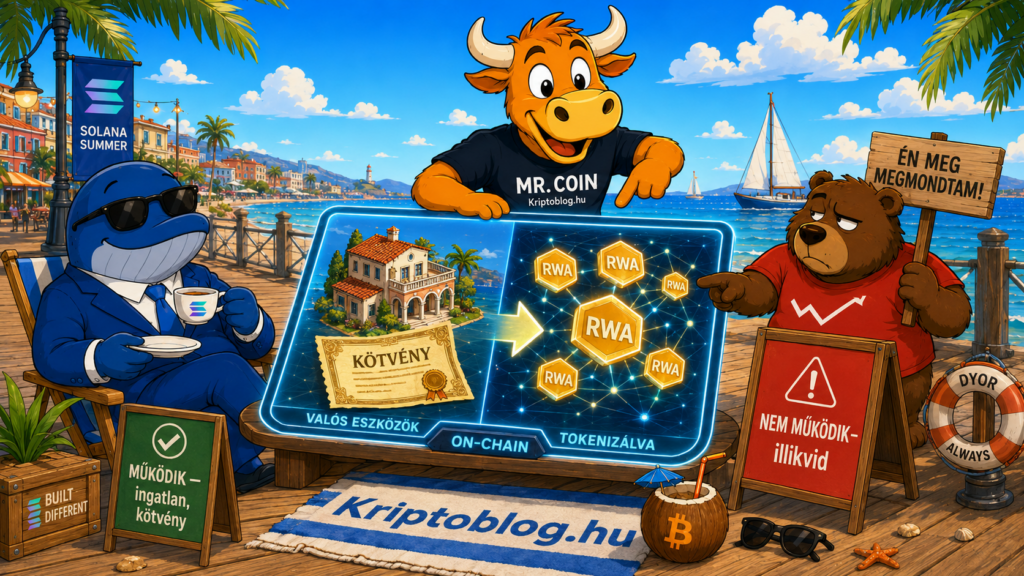
—
title: „A Real World Asset (RWA) Tokenizáció Robbanása: Mi Működik, Mi Nem?”
slug: „rwa-tokenizacio-robbanasa-mi-mukodik-mi-nem”
date: „2026-03-13”
author: „Maxx”
category: „DeFi”
tags:
- „RWA”
- „Tokenizáció”
- „DeFi”
- „Ingatlan”
- „Kötvény”
meta_description: „Felfedezze a Real World Asset (RWA) tokenizáció világát! Ismerje meg a sikeres és sikertelen projekteket, a kockázatokat és a jövőbeli potenciált. Ne maradjon le a következő nagy DeFi hullámról!”
featured_image_prompt: „A hyper-detailed, vibrant animated cartoon illustration with bold black outlines, flat vibrant colors, exaggerated expressions, and dynamic composition. 1792×1024 landscape (16:9). Mr. Coin, a friendly anthropomorphic golden coin character with big eyes, stands proudly next to an energetic young explorer character. They are examining a futuristic cityscape with buildings represented as tokenized assets – skyscrapers transformed into NFTs, roads as fractional ownership certificates. A holographic display showcases various RWA classes: real estate, bonds, commodities, and art. Color palette: a vibrant mix of neon blues, greens, and golds on a dark, futuristic background. NO text, NO letters, NO words, NO watermarks. High contrast, dramatic lighting.”
language: „hu”
—
The Explosion of Real World Asset (RWA) Tokenization: What Works, What Doesn't?
Imagine being able to own a Picasso painting for a few hundred forints. Or digitally owning shares of your favorite football club and trading them instantly. This isn't a distant future, but the promise of Real World Asset (RWA) tokenization, which could become the next big explosion in decentralized finance (DeFi). But what exactly is this technology, and does it actually work?
What is Real World Asset (RWA) Tokenization?
RWA tokenization essentially involves creating digital representations of physical, real-world assets (real estate, artwork, bonds, commodities, etc.) on the blockchain. These digital representations, the tokens, enable fractional ownership of assets, easier trading, and increased liquidity. The idea isn't new, but the growth of the DeFi space and the development of blockchain technology have provided the right foundation for its widespread adoption. Initial projects appeared around 2020, but since 2024, there has been an explosive growth fueled by increasing interest from market participants.
How Does it Work?
The tokenization process generally consists of the following steps:
- Eszköz kiválasztása: A tokenizálandó eszköz meghatározása (pl. egy ingatlan).
- Jogi struktúra kialakítása: A tulajdonjog biztosítása és a token tulajdonosok jogainak meghatározása.
- Értékfelmérés: Az eszköz értékének meghatározása, amely alapján a tokenek árát állítják be.
- Token létrehozása: A blockchain-en tokenek létrehozása, amelyek az eszköz tulajdonrészét képviselik.
- Kereskedés: A tokenek kereskedése decentralizált tőzsdéken (DEX) vagy más platformokon.
The most popular blockchains for tokenization are Ethereum, Solana, and Polygon, but more and more projects are emerging on other networks. Consensus mechanisms ensure the security of the network and the validity of transactions.
Why is it Unique/Interesting?
RWA tokenization offers several advantages over traditional systems:
- Nagyobb likviditás: A tokenek könnyebben kereskedhetők, mint a hagyományos eszközök.
- Frakcionált tulajdon: Lehetővé teszi, hogy a befektetők kisebb részesedést vásároljanak értékes eszközökből.
- Transparency: A blockchain technológia biztosítja a tranzakciók átláthatóságát és nyomon követhetőségét.
- Csökkentett költségek: A közvetítők kikapcsolásával csökkenthetők a költségek.
- Hozzáférés: A tokenizáció megnyitja a hozzáférést a befektetők számára olyan eszközökhöz, amelyek korábban elérhetetlenek voltak.
Current Market Situation
Market growth is impressive. In 2024, more than $500 million worth of RWA tokens were put into circulation, and experts predict that this number could grow exponentially in the coming years. More and more institutional investors are also showing interest in the technology, which is giving the market further momentum. Some of the largest projects include Maple Finance, Ondo Finance, and Centrifuge, which tokenize different types of RWAs.
Use Cases
The application areas for RWA tokenization are almost limitless:
- Ingatlan: Ingatlanok frakcionált tulajdonlása, bérbeadás és kereskedés.
- Kötvények: Kötvények tokenizálása és automatikus kamatfizetés.
- Művészeti tárgyak: Művészeti tárgyak frakcionált tulajdonlása és digitális gyűjtemények létrehozása.
- Áruk: Arany, olaj és egyéb áruk tokenizálása.
- Szellemi tulajdon: Szellemi tulajdon jogainak tokenizálása és monetizálása.
Risks and Warnings
Although RWA tokenization is promising, it's important to be aware of the risks:
- Regulatory uncertainty: A szabályozási környezet még nem teljesen tisztázott, ami kockázatot jelenthet a befektetők számára.
- Technológiai kockázatok: A blockchain technológia sérülékenységei és a smart contract hibái.
- Likviditási kockázat: Néhány RWA token likviditása alacsony lehet.
- Jogi kockázatok: A tokenek tulajdonjogának jogi érvényesítése kérdéses lehet.
Important: Befektetés előtt végezzen alapos kutatást (DYOR – Do Your Own Research) és mérlegelje a kockázatokat! Akik korán felismerték az RWA tokenizáció potenciálját, már most jelentős előnyökkel rendelkeznek.
Future Prospects
Experts believe that RWA tokenization is the key to the future of DeFi. In the coming months, more and more projects are expected to launch, and the technology will become more widely adopted. The window is closing, don't miss out! Roadmaps point towards scalability, regulatory compliance, and institutional adoption. The community is actively involved in development and is collaborating with more and more partners to promote the technology.
Conclusion
RWA tokenization is a revolutionary technology that has the potential to transform financial markets. Fractional ownership, increased liquidity, and transparency offer attractive benefits to investors. Although it involves risks, the future prospects are promising, and the technology is expected to play a key role in the DeFi ecosystem.
Sources
- true 和 real 有什么区别 – 知乎
- float 和 real 数据类型 的区别??_百度知道
- real各种形式? – 百度知道
- actual与real什么区别_百度知道
- 【买前必看】2025年最新AR眼镜对比测评:XREAL One、雷鸟air3 …
- 有问题,就会有答案 – 知乎
- RWA-Anlagen – Vorschriften, Wartung und Prüfung
- 全球首个 RWA 注册平台落地香港,什么是 RWA 资产?其与稳定币之 …
- 央行等八部门联合发文,首次明确 RWA 定义,并采取了「原则禁止
- 银行的RWA是什么意思? – 知乎
- 市场风险RWA的定义是什么? – 知乎
- 有人说稳定币是RWA的一种,那什么是RWA(真实资产代币化)?




Comments
Share your view: questions, corrections, and counterpoints are welcome. Comments are for constructive, useful discussion.