 blog
blog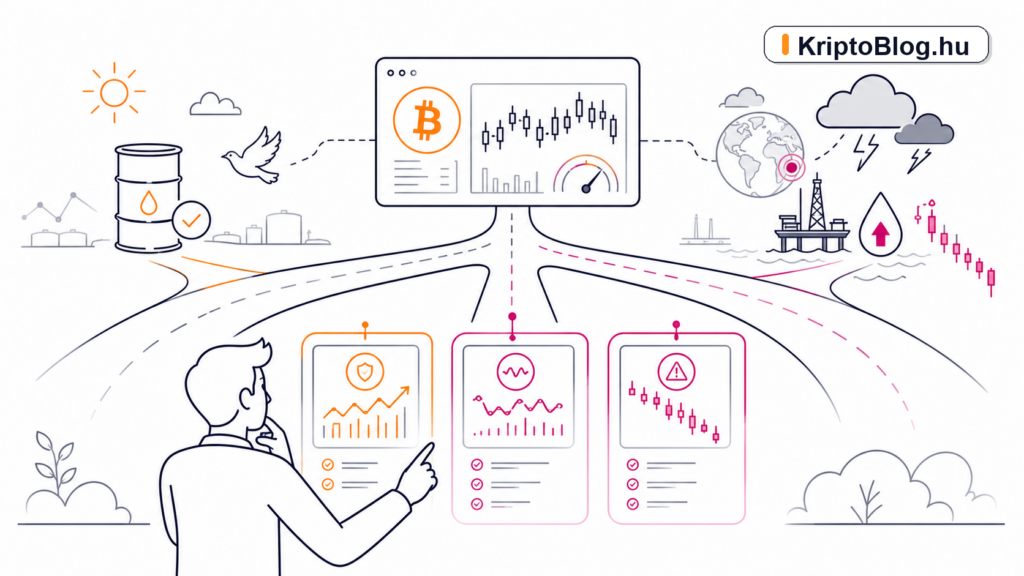
In Short
It is easy to talk about Bitcoin as if technical levels, ETF flows and on-chain indicators were the only drivers. But there are periods when macro and geopolitics become louder than any chart pattern.
On July 11, 2026, CoinGecko showed Bitcoin trading around the $64,000 area, while AP and other market sources pointed to renewed U.S.-Iran tension, Strait of Hormuz security and oil prices as central risk factors. In this environment, Bitcoin does not trade as an isolated crypto asset, but as one of the most sensitive thermometers of risk appetite.
Why Oil Matters For Bitcoin
At first, it may sound odd: what does Brent crude or the Strait of Hormuz have to do with BTC? The link runs through inflation and rates. If oil jumps, markets may price renewed inflation pressure. If inflation fears rise, rate expectations can tighten. If rates look tighter, risk assets, including Bitcoin, can come under pressure.
AP reported in July that the fragile U.S.-Iran ceasefire and uncertainty around the Strait of Hormuz renewed anxiety about fuel prices. MarketWatch also reported that crude prices rose after renewed military tensions and U.S. measures related to Iranian oil exports.
Three Scenarios
1. De-escalation and risk-on return. If diplomatic channels strengthen, the Hormuz risk premium falls and oil cools, markets may be willing to take risk again. In that path, Bitcoin can benefit, especially if positioning had become too short or too defensive beforehand.
2. Prolonged uncertainty. If there is no full escalation but no clean resolution either, Bitcoin may trade sideways and nervously. This path is usually about volatility: sharp rebounds, quick rejections and many false breakouts.
3. Energy-price shock and risk-off. If the conflict sharply increases oil-supply fears, markets may price inflation and recession risk at the same time. In that environment, Bitcoin can behave like a high-beta risk asset: sold first, with the “digital refuge” narrative appearing only later, if at all.
KriptoBlog.hu View
The main takeaway is simple: under geopolitical stress, the question is not whether Bitcoin will “certainly” rise or fall. There is no certain path. The real question is whether position size, stops, cash reserves and time horizon can survive all three scenarios.
Bitcoin’s long-term narrative remains unique, but in the short run markets often treat it as a liquid, fast-to-sell risk asset. On geopolitical days, the chart should be read alongside oil, the dollar, bond yields and liquidation data.
What To Watch Now
- Brent and WTI: if oil jumps quickly, inflation fears may return.
- Strait of Hormuz: shipping and insurance risk can feed into energy prices fast.
- Dollar and yields: a stronger dollar and rising yields usually make the BTC setup harder.
- Derivatives liquidations: geopolitical headlines often trigger sudden long or short squeezes.
- ETF flows: institutional buying can cushion stress if it remains consistent.
The Takeaway
Bitcoin’s three scenarios are not a prediction. They are a risk map. De-escalation can bring a risk-on rebound. Prolonged uncertainty can keep the market choppy. An energy-price shock can hurt BTC, even if many investors still view it as a longer-term refuge asset.
Anyone watching only the chart is seeing half the screen. The other half is in macro, oil and the geopolitical risk premium.
Sources
- AP News: US-Iran ceasefire anxiety and fuel prices
- MarketWatch: crude prices and renewed US-Iran tensions
- CoinGecko: Bitcoin market data
Not financial advice. This article is for education and analysis only; geopolitical data can change quickly.






Comments
Share your view: questions, corrections, and counterpoints are welcome. Comments are for constructive, useful discussion.