 blog
blog
In short: Ripple’s Washington strategy can be both useful and delicate. Useful, because the U.S. crypto market has long needed clearer rules. Delicate, because if rules are mainly shaped and afforded by large players, smaller innovators may be pushed out.
Why Everyone Wants Regulatory Clarity
Ripple has argued for years that crypto cannot develop healthily under lasting legal uncertainty. That is understandable: banks, payment firms, custody providers and institutional investors struggle to build infrastructure when it is unclear which token, product or activity falls under which regulator.
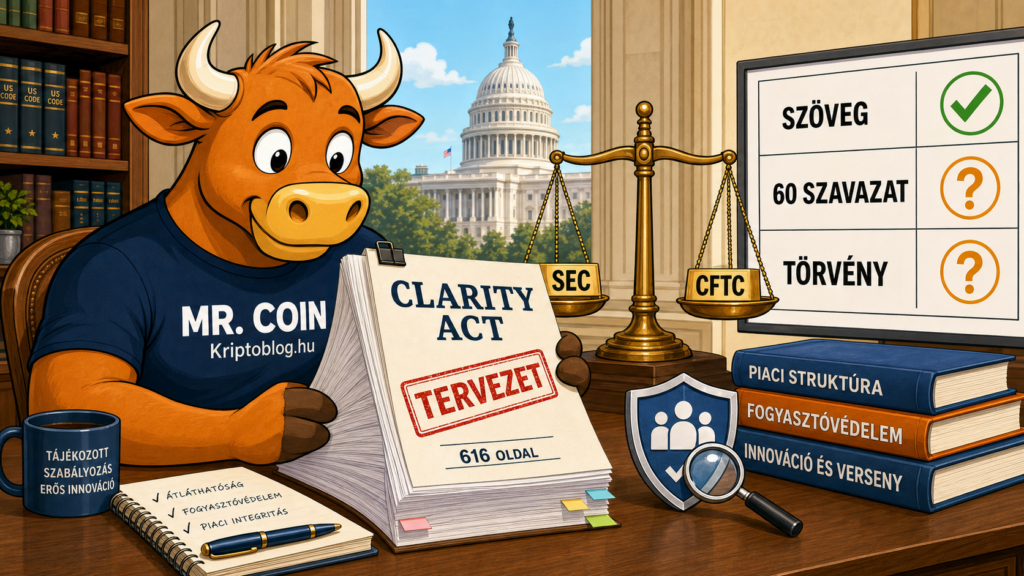
The SEC Crypto Task Force’s 2026 communications point in the same direction: a clearer, more practical framework for crypto asset markets. Senate Banking Committee materials around the CLARITY Act also show that the U.S. debate is no longer only about enforcement, but about market structure.
Where This Becomes A Competition Question
Regulatory clarity is a good goal. The problem begins when compliance costs, registration processes, legal documentation and ongoing supervision become so expensive that only the largest companies can comply. Regulation can protect consumers on paper while protecting incumbents in practice.
That is the essence of regulatory capture. It does not necessarily mean open corruption; it means rules start fitting the operating models of already powerful players. Startups, open protocols and smaller developers are not legally banned, but become economically hard to sustain.
Ripple’s Role: Infrastructure Or Influence?
Ripple positions itself as financial infrastructure: payments, stablecoin-powered solutions, custody and institutional usage. It is therefore logical that it wants rules under which banks and large enterprises can operate comfortably.
That is not inherently bad, but readers should use a dual lens. A large firm’s policy proposal can be technically valuable while also protecting its own business advantages. The quality of crypto regulation is therefore measured not only by clarity, but by openness and proportionality.
What To Watch
- Self-custody: do the rules preserve the right and practice of holding one’s own wallet?
- Path for smaller players: will startups have proportionate compliance options?
- Jurisdiction: how will SEC and CFTC roles divide across digital assets, stablecoins and exchanges?
- Open development: will protocol developers receive clear exemptions or safe-harbor-like paths?
KriptoBlog Takeaway
Ripple’s D.C. strategy is a sign that crypto has entered a more mature policy era. Regulatory clarity is needed because institutional infrastructure remains constrained without it. But good regulation is not only clear. It is proportionate. If the gate opens only for the largest players, crypto loses one of its strongest promises: open competition.
Not investment or legal advice. Legislative processes can change quickly; specific rules should always be checked against primary sources.






Comments
Share your view: questions, corrections, and counterpoints are welcome. Comments are for constructive, useful discussion.