 blog
blog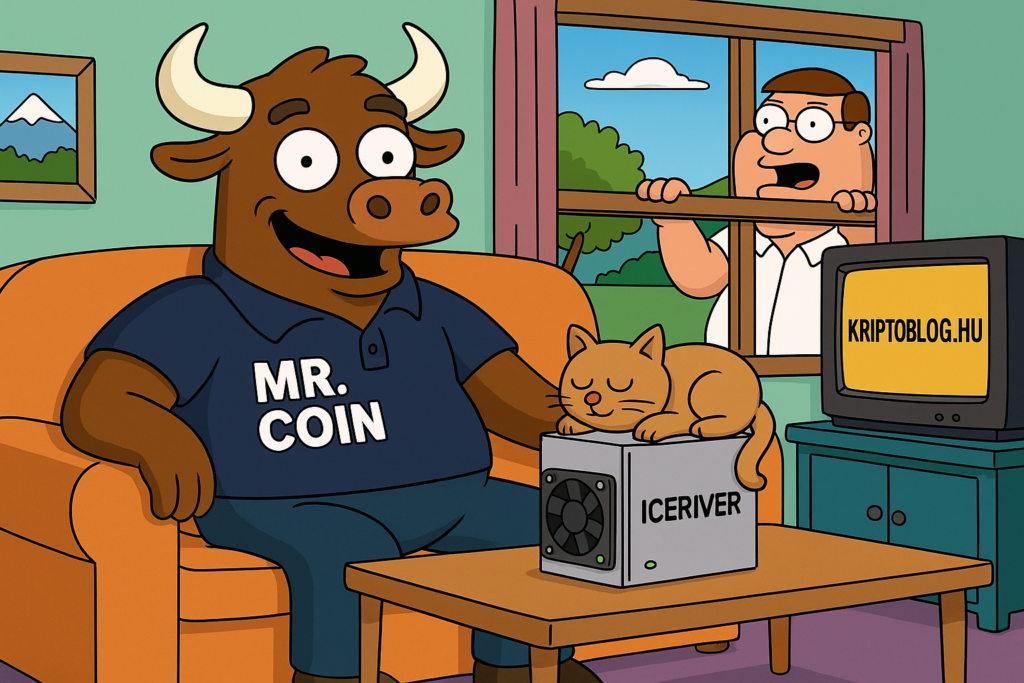
Home Mining 2026: Quiet and Energy-Efficient Solutions
Remember when mining meant an airplane-hangar-sized fan rattling in the middle of your living room, neighbors knocking on your door, and nearly fainting when you saw the electricity bill? Well, in 2026, this has completely changed. Home mining – that is, mining cryptocurrency at home – has entered an entirely new era, and honestly, for the first time I feel that this is truly accessible to everyone.
The Home Miner Revolution
When I first heard about the IceRiver mini ASICs a few years ago, I admit I was skeptical. A 100-watt mining machine? What good could that be? Then I realized you don't need to compete with the big Bitcoin ASICs – you need to find the opportunity in altcoin mining. And here's the key: the new generation of home miners are quiet, energy-efficient, and can run even in a bedroom.
I think the biggest breakthrough is that these machines don't require special infrastructure. No need for industrial power, no need for a server room, no need for a soundproofed room. You put it on a shelf, plug it into the wall, connect to a pool – and you're done.
IceRiver AL0 — The "Bedroom Miner"
If there's one machine I would recommend to everyone as an entry-level ASIC, it's the IceRiver AL0. Let's look at the numbers:
| Parameter | Value |
|---|---|
| Algorithm | Alephium (Blake3) |
| Hashrate | 400 GH/s |
| Consumption | 100W |
| Noise level | ~10 dB |
| Price | ~$200 (approx. 75,000 HUF) |
10 dB. Do you know what that means? It's quieter than your refrigerator. I'm serious: my wife didn't even know there was a mining machine running in the study until I showed her. This is the "bedroom miner" – and they don't call it that as a joke.
Alephium (ALPH) is a relatively new Layer 1 project that uses BlockFlow sharding technology. It's not the biggest coin, but it has an active developer community and a growing ecosystem. The point is: if the ALPH price rises, this little machine could become a goldmine – literally.
Goldshell KA Box Pro and IceRiver KS2 Lite — Kaspa Miners
If you're interested in Kaspa (KAS) – and in 2026 it's one of the most exciting proof-of-work altcoins – you have two great home options:
| Model | Hashrate | Consumption | Noise | Price |
|---|---|---|---|---|
| Goldshell KA Box Pro | 1.6 TH/s | 600W | ~35 dB | ~$700 |
| IceRiver KS2 Lite | 2 TH/s | 500W | ~45 dB | ~$500 |
A Goldshell KA Box Pro is an elegant little box that could almost pass as decoration. 35 dB – that's library-level noise. It consumes 600W, which isn't negligible, but in return you get 1.6 TH/s hashrate for Kaspa mining.
The IceRiver KS2 Lite is stronger (2 TH/s) and cheaper (~$500), but louder (45 dB – that's like a quiet conversation). Personally, I'd choose the KS2 Lite because the price/performance ratio is better, and 45 dB in a closed room is perfectly acceptable.
So which one should you choose? I think it depends on how sensitive you are to noise and how big your budget is. If you want to keep it in the living room, KA Box Pro. If you have a spare room or garage, KS2 Lite.
Hungarian Energy Calculation — The Bottom Line
Now here comes the important part. Because it doesn't matter how cheap the machine is if electricity eats up the profit. Let's calculate together with the With 2026 Hungarian energy prices:
- Subsidized rate: 36.386 HUF/kWh (within the 2,523 kWh/year limit)
- Market rate: 70.1 HUF/kWh (above the limit)
A 100W machine (like the IceRiver AL0) daily consumption:
100W × 24 hours = 2.4 kWh/day
- At subsidized rate: 2.4 × 36.386 = ~87 HUF/day (2,618 HUF/month)
- At market rate: 2.4 × 70.1 = ~168 HUF/day (5,043 HUF/month)
Annually, the 100W machine 876 kWhconsumed. This is one-third of the subsidized allowance (2,523 kWh) — so if you don't heat with electricity and have normal household consumption, you'll easily fit within the subsidized tier.
A 600W Goldshell KA Box Pro on the other hand, the annual consumption is 5,256 kWh — this far exceeds the subsidized allowance, so most of the consumption goes at market rate. Monthly electricity cost: approx. 25,000-30,000 HUF. This needs serious consideration.
Practical tips — what nobody tells you
Now I'll reveal a few things that ASIC reviews usually don't mention:
- Heat: A 100W machine produces roughly as much heat as a 100W light bulb. It won't heat up a room. A 600W one, however, will — in winter this can even be an advantage (free heating!), but in summer it's problematic without air conditioning.
- Neighbors: In an apartment building, the 10 dB AL0 is no problem. But don't place the 45 dB KS2 Lite next to a shared wall with your neighbor, as the vibration can travel through.
- Internet: Mining requires surprisingly little bandwidth — a 10 Mbit connection is more than enough. Stability matters more than speed.
- Power supply: Most home miners come with their own power supply, but check whether your outlet/power strip can handle the load. Don't plug a 600W machine into a cheap power strip!
- Dust: Vacuum the fans once a month. Dust is the number one enemy of mining machines.
Return on investment — is it even worth it?
The big question, right? My experience is that home mini ASICs are not about getting rich quick. Rather, it's about:
- You continuously accumulate altcoins that you HODL (hold) until the next bull run
- The machine's cost can be recovered in 6-18 months if the price is favorable
- Meanwhile you learn about the technology — and that's invaluable
An IceRiver AL0 for ~$200 — if it produces $0.50-1.00 daily profit (which is realistic at current ALPH prices), it pays for itself in 200-400 days. Not bad for a device that then produces coins for you for free.
With Kaspa miners, the risk is higher but so is the potential profit. KAS is one of the fastest-growing proof-of-work coins, and if the trend continues, the current investment could pay off handsomely.
In Conclusion
In 2026, home mining is no longer sci-fi or the privilege of tech geeks. A $200, bedroom-friendly machine is enough to enter the world of crypto mining. The question isn't whether "it's worth it" — but which coin you believe in long-term, and whether you're willing to patiently accumulate.
Which home miner do you like best? Let us know in the comments!
Sources
- ASIC Miner Value — Profitability Calculator
- WhatToMine — Mining Profitability
- CryptoMinerBros — ASIC Miner Shop
- Blockchain Council — Education & Certification
⚠️ Legal disclaimer: This article is for informational purposes only and does not constitute financial or investment advice. Cryptocurrency mining is a risky activity — changes in prices, difficulty levels, and energy costs can significantly affect profitability. Always do your own research (DYOR) before making any investment decisions. The author assumes no responsibility for any losses resulting from the reader's investment decisions.




Comments
Share your view: questions, corrections, and counterpoints are welcome. Comments are for constructive, useful discussion.