 blog
blog
Binance co-CEO Richard Teng says about 70% of withdrawals from the European Union went to self-custody wallets and roughly 30% went to MiCA-authorized providers after the July 1, 2026 transitional deadline. The figure is an interesting signal, but it is not an independently audited market statistic: it should be treated as a company statement about Binance's own customer flows.
Verification date: July 26, 2026. This informational article does not constitute legal or tax advice and is not investment advice.
What can be verified with confidence?
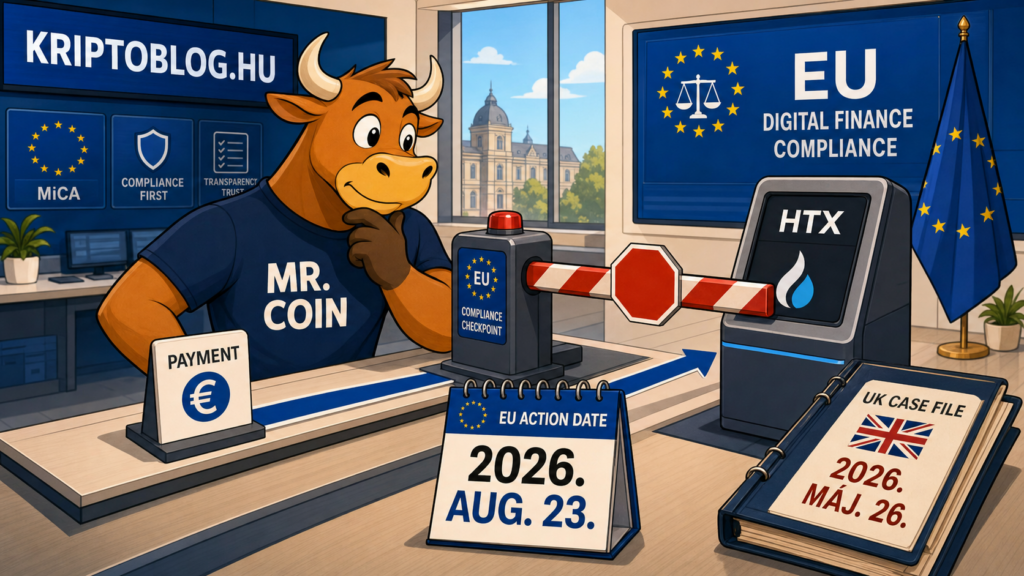
According to ESMA's official MiCA page and question-and-answer material, the transitional period for crypto-asset service providers previously operating under national rules could run no later than July 1, 2026. If a provider had not obtained MiCA authorization by then, it could not continue providing crypto services unchanged under the transitional rule; it had to wind down the affected activity in an orderly manner until authorization was granted.
In a statement dated April 17, 2026, ESMA called on national authorities to prepare for the end of transitional periods, act against unauthorized crypto-asset services, and ensure an orderly wind-down for clients. The regulator also stressed that a user's protections depend on whether the provider is authorized.
Binance suspended authorization-dependent services in several EU markets at the end of June after failing to obtain a MiCA license by the deadline. Euronews reported that affected customers' assets remained accessible for withdrawal while new deposits and several services were restricted.
What does the 70% figure mean?
Citing Richard Teng, The Block reported that approximately 70% of Binance's post-deadline EU withdrawal volume went to self-custody wallets and 30% went to MiCA-authorized platforms. Europa Press published the same ratio based on a company statement.
This does not mean that 70% of all European crypto investors switched to self-custody. The ratio describes withdrawal flows observed by Binance, not the number of users, at least as the public reports present it. The behavior of customers at one large provider cannot automatically represent the entire EU market.
The public material also does not show precisely which countries, assets, and time period Binance included, how it identified self-custody addresses, or whether it filtered funds later forwarded to another provider. Arrival at a self-custody address also does not reveal whether the assets remained there or merely used it as an interim destination. Without an independent audit, detailed methodology, and underlying data, the 70/30 split is a directional indicator rather than a comprehensive market measurement.
Why might someone choose a self-custody wallet?
A self-custody wallet gives its user direct control over private keys and avoids forcing an immediate choice of a new service provider. During an unexpected service wind-down, it can be a logical interim destination: the customer withdraws first and decides later where and how to use the assets.
Self-custody is not automatically safer, however. If a seed phrase is lost, the wrong network or address is used, wallet software is malicious, or a phishing signature is approved, there is no customer service team that can simply reverse the transaction. Much of the technical responsibility moves to the user.
A MiCA-authorized provider, by contrast, must meet organizational, operational, customer-information, and asset-protection requirements, but it still carries custody, counterparty, and operational risk. The choice is not a simple contest between freedom and safety: the two models allocate different risks between the service provider and the customer.
Does this prove that MiCA backfired?
No. The company figure raises an important question: if most customers leaving a large unauthorized platform do not move directly to another authorized provider, activity outside the regulated service perimeter may increase. That could affect customer protection, transaction visibility, and the information available to authorities.
MiCA's purpose, however, is not to keep every crypto asset with an EU service provider. The framework governs the authorization and operation of businesses offering services in the EU. Holding assets in a self-custody wallet is not, by itself, evidence of regulatory evasion, and independent on-chain ownership is not the same as an unauthorized company providing a regulated service.
A conclusion that MiCA failed would require far more evidence: total market withdrawal volume, user counts, country-level breakdowns, the methodology used to classify destination addresses, subsequent transfers, complaints, and losses. The 70% figure is one provider's short-period observation, not an impact assessment.
What should users check when switching?
The first step is to verify in ESMA's MiCA register and on the relevant national authority's website whether the selected provider is actually authorized. A MiCA-compliant label on a website is not, by itself, an authorization.
For self-custody, the seed phrase should be stored offline, in more than one secure copy, and away from unauthorized people. The receiving address and network should be checked character by character, followed by a small test transfer. An unknown token, unsolicited support message, or urgent request to connect a wallet is a reason to stop.
When choosing an authorized platform, users should compare fees, withdrawal limits, the custody model, complaint handling, supported networks, and recovery options in addition to the license itself. Regulated status is an important minimum, not a guarantee that every risk has disappeared.
In brief
The July 1 end of MiCA's transitional period and Binance's suspension of some EU services are verifiable facts. The 70% self-custody ratio, however, is a statement from a Binance executive without a detailed public methodology or independent audit. It deserves attention as an early signal, but it should not be projected onto the entire EU market or treated on its own as proof of MiCA's success or failure.




Comments
Share your view: questions, corrections, and counterpoints are welcome. Comments are for constructive, useful discussion.