 blog
blog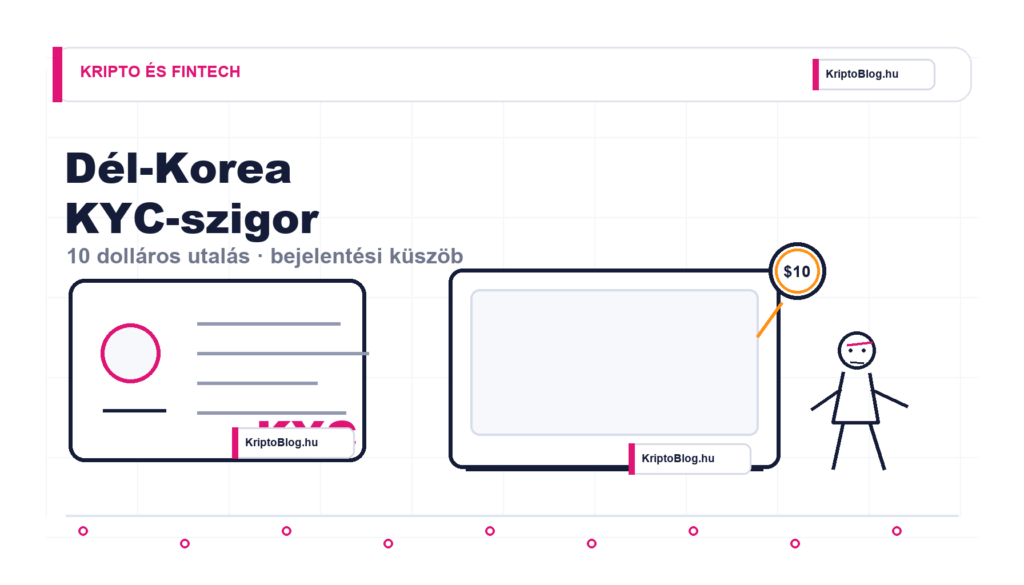
In Short
South Korea’s crypto compliance debate is not only about how major exchanges identify customers. It is increasingly about what information should be required for smaller transfers, recipient identification and Travel Rule compliance.
The previous ultra-specific claim about “10 dollar transfers” should be treated carefully. The important trend is broader: regulators want less room for anonymous or hard-to-trace transactions.
What Is The Travel Rule?
The Travel Rule is a core anti-money-laundering principle. For certain transfers, service providers must transmit, verify or record information about the sender and recipient. In crypto this is difficult because a blockchain address is not the same thing as a verified customer profile.
South Korea has long been one of the stricter crypto markets. Exchanges work with real-name bank accounts, KYC and compliance systems. The next debate is how lightweight small-value transfers can remain.
Why Users Should Care
Most users encounter regulation when a withdrawal slows down, an exchange asks for extra information, or a recipient wallet requires additional details. That friction exists because providers are trying to avoid sanctions, mixer and unknown-counterparty risk.
The key question is proportionality. If every tiny transaction receives bank-level checks, crypto becomes harder to use. If controls are too weak, abuse and regulatory pressure increase.
KriptoBlog.hu View
South Korea is a preview of where centralized crypto services are heading. Self-custody remains important, but once an exchange, broker or payment gateway is involved, KYC and Travel Rule logic enters the flow.
For users, the practical question is whether a provider clearly explains what data it requests, why it requests it, how long it stores it, and whether transaction records can be exported for tax and compliance purposes.
What To Watch
- Whether exchanges request recipient data for external wallet withdrawals.
- Which thresholds trigger additional verification.
- Whether self-custody wallets are treated differently.
- Whether export tools exist for tax and compliance records.
Sources
- CryptoBriefing: South Korea Travel Rule expansion
- FATF targeted report
- Notabene: South Korea Travel Rule overview
Not financial or legal advice.




Comments
Share your view: questions, corrections, and counterpoints are welcome. Comments are for constructive, useful discussion.