 blog
blog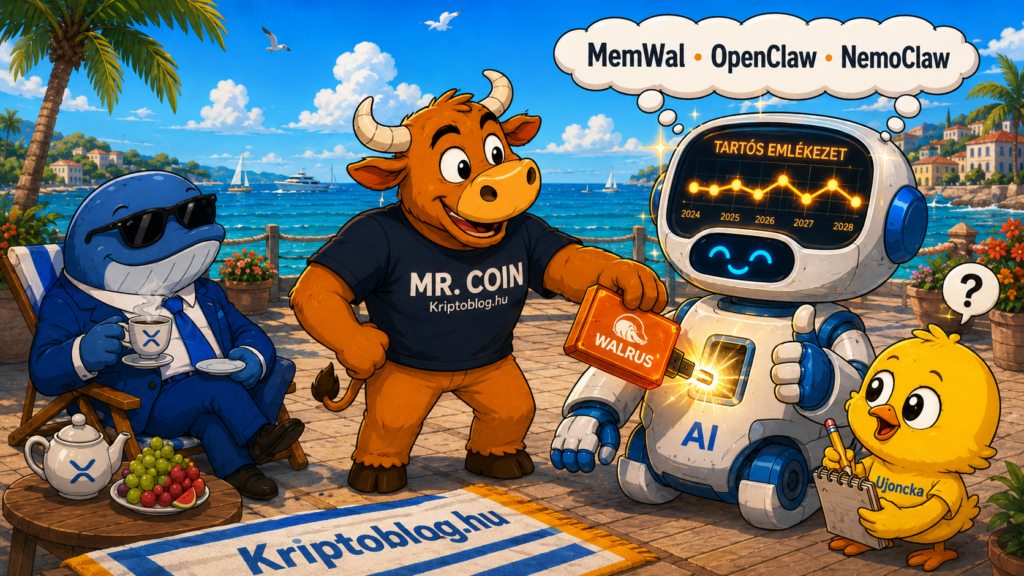
A mesterséges intelligencia ügynökök egyik legnagyobb akadálya nem a rekenyteljesítmény, hanem a kollektív és tartós emlékezet hiánya. A Walrus protokoll az új MemWal, OpenClaw és NemoClaw integrációkkal döntötte meg a technológiai frontot, létrehozva egy olyan digitális kontinuumot, amely lehetővé teszi az AI-k számára a valódi fejlődést és visszatekintést.
When interacting with an artificial intelligence, it often feels as though we are speaking with an infinitely intelligent individual who loses every previous experience in an instant. In technical circles, this phenomenon is known as "AI amnesia" or context window limitation. Within the crypto-AI ecosystem, however, this is not merely a matter of convenience; it is the primary barrier to the creation of truly autonomous, evolving digital entities. The Walrus protocol is now entering the arena with an architecture capable of breaking through this limitation.
AI Agent Amnesia: Why Memory is the Key to Growth
The operation of current Large Language Models (LLMs) is fundamentally static. While they can process massive amounts of data, their experiences only last as long as the capacity of their current context window. Once a conversation or task complexity exceeds this limit, the agent loses previous instructions, past mistakes, and user preferences.
As analyzed by Decrypt, the limitations of long-term memory directly dictate what AI agents can achieve in practice. If an agent cannot remember decisions made yesterday or processes from last week, it cannot make true strategic decisions; it can only react to immediate stimuli. This digital amnesia prevents the execution of complex, multi-day processes, which are essential for truly "agentic" intelligence.
This is not just a technical constraint; it is an ontological hurdle. As the cryptocurrency market reaches a valuation of $2.63 trillion (according to CoinGecko data), there is an increasing need for infrastructure capable of maintaining an AI's personality and continuity across a decentralized network.
The Walrus Solution: MemWal, OpenClaw, and NemoClaw
The Walrus protocol does not offer just another simple storage solution; it has built a complex memory management layer specifically for AI agents. These developments rest on three pillars that collectively tackle the memory problem:
Elsőként a MemWal technológia áll a központban. Ez a protokoll lehetővé teszi, hogy az AI ügynökök számára létrehozzunk egy tartós, strukturált és könnyen hozzáférhető adatbázist, amely nem a pillanatnyi kontextusba, hanem a protokoll mélyére van rögzítve. A Decrypt beszámolója alapján a MemWal az a kulcs, amely lehetővé teszi a hosszú távú tárolást, így az ügynök képes lesz visszatekinteni a korábbi interakcióira.
Másodszor az OpenClaw integráció hadiréve teszi lehetővé, hogy a memóriakezelés ne egy zárt rendszerben történjen, hanem nyílt, moduláris módon kapcsolódjon más fejlesztésekhez is. Ez biztosítja a skálázhatóságot, ahol az ügynökök különböző platformokon is ugyanazt a tudást használhatják.
Harmadsorban a NemoClaw integráció teszi teljessé a folyamatot, segítve az adatok precíz és gyors lekérést a komplex feladatok során. Ezek a három technológia együtt egy olyan digitális kontinuumot hoznak létre, amelyben az AI nem csak adatokat tárol, hanem tapasztalatokat gyűjt. Ez a különbséget teszi meg a Walrus által támogatott ügynököket a statikus, személytelen LLM-ektől, amelyek minden új munkamenetnél egy tiszta lappal indulnak.
Decentralized Storage vs. AI Speed: The Technical Shift
A major dilemma in the crypto-AI sector is the tension between decentralization and speed. Decentralized storage systems (such as blockchain-based solutions) are renowned for security and durability, but they are often too slow for an AI agent to access its memory during real-time, interactive processes. An AI agent needs to recall previous context in milliseconds to avoid the sensation of interacting with a slow, clunky machine.
The Walrus protocol represents a technical shift here. The goal is to align the security of decentralized storage (ensuring data cannot be deleted or controlled by a single entity) with the extreme speed required by AI. This hybrid approach optimizes memory tasks across different protocol layers: faster, current context is handled by high-speed layers, while deep, long-term experiences are preserved by the stable, decentralized storage layer.
This solution is critical in the crypto-AI ecosystem, where trust (decentralization) and efficiency (speed) are both essential for success. If an AI agent is managing a user's capital within a DeFi protocol, it cannot afford to forget previous security instructions due to decentralized latency.
Market Context: AI's Role in the $2.63T Crypto Ecosystem
Nem lehet elégszer hangsúlyozni a piaci környezetet, amelyben a Walrus mozog. A CoinGecko legfrissebb adatai szerint a teljes kriptovaluta piaci kapitalizáció elérte a 2,63 billió dollárt. Ebben a hatalmas ökoszisémában a Bitcoin (BTC) dominanciája 58,1%-os, piaci értéke pedig 1,53 billió dollár. Bár a Bitcoin és az Ethereum (272,34 milliárd dollár) dominálják a piacot, a növekedési potenciál egyre inkább az AI-szektor integrációjában rejlik.
The emergence of Agentic AI brings a new paradigm to the crypto market. These agents will not only provide information but will also execute transactions—trading, providing liquidity, or acting as automated portfolio managers. However, for these agents to play a credible role in a $2.63 trillion market, they require reliable, memorable infrastructure.
In this context, the Walrus protocol is not just a technical tool, but a market catalyst. The integration of the AI sector into the crypto world is one of the most valuable value-creation processes, and solving the memory problem is a fundamental step in this evolution.
Key Takeaways for Investors
For the reader, this development means that future interactions with AI will not be simple text-response pairs, but continuous, evolving relationships.
Mit figyeljen a befektetők és a technológiai érdeklődők?
- A tartósság fontossága: Ne csak a sebességet nézzék az AI-protokolloknál, hanem azt is, hogyan kezelik a hosszú távú adatokat. Egy AI, ami elfelejti a felhasználót, nem lesz értékes eszközt a kripto-piacon.
- Infrastrukturális integráció: Figyeljék, hogyan kapcsolódnak össze a tárolóprotokollok (mint a Walrus) a nagy nyelvi modellekkel. A siker kulcsa az integráció (OpenClaw, NemoClaw).
- Piaci trendek: Az AI és a kripto metszete az egyik legmagasabb kockázatú, de egyben a legmagasabb megtérülési eséllyel rendelkező terület a jelenlegi 2,63 billió dolláros globális piaci környezetben.
In summary: the Walrus protocol turns technological amnesia into a strategic advantage, creating a digital continuum that could serve as the foundation for the next generation of autonomous crypto-AI agents.
Our own approach: we don't buy on the news, we buy on our theses. If someone believes that mobile crypto adoption is a long-term story that eventually plays out, then today's quiet price isn't alarming — it's more like opportunity. If someone doesn't believe it, no single feature announcement will convince them. Everyone decides this for themselves, at their own risk — our job is to ask the right questions precisely. Our own results have been mixed and probably will continue to be; we don't promise certain answers, only honest thinking.
The developments of the Walrus protocol—through MemWal, OpenClaw, and NemoClaw integrations—open a new era for AI agents. The problem that has long been a major bottleneck for artificial intelligence development (the lack of long-term memory) has now found a decentralized, yet fast and scalable solution.
As the cryptocurrency market ($2.63 trillion) continues to evolve, the integration of the AI sector is not just a trend, but an inevitable evolution. Walrus has the potential to elevate AI from static machines into true digital entities that learn from experience, capable of solving complex, long-term tasks within the decentralized world. The biggest question for the coming years is not whether AI can think, but whether it can remember.
Sources
- Decrypt: Agentic Memory: Walrus Takes On AI’s Next Big Bottleneck (forrás) [2024.05.01]
- CoinGecko: Kripto piaci adatok (BTC, ETH, Market Cap) [2024.05.01]




Comments
Share your view: questions, corrections, and counterpoints are welcome. Comments are for constructive, useful discussion.