 blog
blog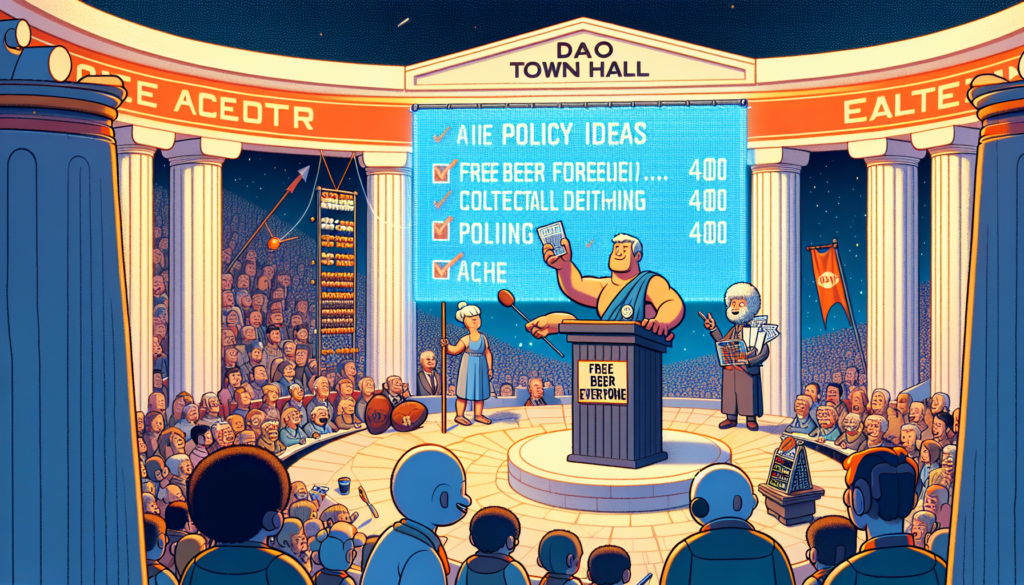
What is a DAO?
A Decentralized Autonomous Organization (DAO) – decentralized autonomous organization – is one of the most ambitious applications of blockchain technology token holders' votes determine, executed by smart contracts. This is DAO.
How does a DAO work?
- Governance token: Members hold governance tokens (e.g., UNI, AAVE, MKR)
- Proposal: Anyone (who reaches a minimum token threshold) can make a proposal
- Voting: Token holders vote on the proposal
- Execution: If the vote is successful, the smart contract automatically executes the decision
The Largest DAOs in 2026
Uniswap DAO
- Governs the world's largest decentralized exchange
- UNI token: ~$1 billion+ governance treasury
- Decisions: fee structure, new chain support, development funding
MakerDAO (Sky)
- Governs the DAI/USDS stablecoin system
- One of the most active DAOs – regular votes on interest rates, collateral ratios
- 2024 rebrand: SubDAO structure for more efficient operations
Lido DAO
- Governs the largest liquid staking protocol (~30% of all staked ETH)
- Critical question: Lido's centralization risk for Ethereum
Arbitrum DAO
- Governance of the Arbitrum Layer 2 ecosystem
- Massive treasury: billions of dollars worth of ARB tokens
- With active community debates and votes
DAO Types
- Protocol DAO: Governance of DeFi protocols (Uniswap, Aave, Compound)
- Investment DAO: Collective investment decisions (The LAO, MetaCartel Ventures)
- Social DAO: Community building (Friends with Benefits)
- Collector DAO: Collective NFT/artwork purchasing (PleasrDAO, ConstitutionDAO)
- Service DAO: Decentralized workforce (Raid Guild, LexDAO)
- Media DAO: Decentralized content creation (BanklessDAO)
Iconic DAO Moments
- The DAO hack (2016): The first major DAO was hacked – this led to the Ethereum/Ethereum Classic split
- ConstitutionDAO (2021): Raised $47 million to buy an original copy of the US Constitution – ultimately lost at auction
- MakerDAO Black Thursday (2020): DAI nearly collapsed amid market panic – the DAO saved it through crisis management
Challenges
1. Voter Apathy
In most DAOs, only 5-10% of token holders vote regularly. The majority doesn't care about governance – only about token price appreciation.
2. Plutocracy
Whoever holds more tokens has greater voting power. This represents rule by the wealthy – exactly what decentralization is supposed to eliminate.
3. Legal Status
Most DAOs have no legal personality. This is problematic for contracting, hiring, and taxation. Wyoming and the Marshall Islands have created DAO-specific legal frameworks, but this is still rare.
4. Efficiency
Democratic decision-making is slow. A traditional company's CEO decides in minutes; in a DAO, the voting process takes days or weeks.
DAO 2.0 Evolution
- Delegated voting: Token holders can delegate their voting rights to active participants (similar to representative democracy)
- Optimistic governance: Proposals are automatically approved unless there is an objection
- SubDAOs: Smaller, specialized working groups with faster decision-making
- AI-assisted governance: Artificial intelligence helps analyze and summarize proposals
In Conclusion
DAOs are the experimental ground for organizational innovation. They're not perfect — but they pose a fundamentally new question: what if we managed organizations not from top-down, but from bottom-up?
A DAO is not a competitor to the traditional company — it's a new species in organizational evolution.
⚠️ Legal disclaimer: This article is for informational purposes only and does not constitute investment advice. All investment decisions are made at your own risk.

Comments
Share your view: questions, corrections, and counterpoints are welcome. Comments are for constructive, useful discussion.