 blog
blog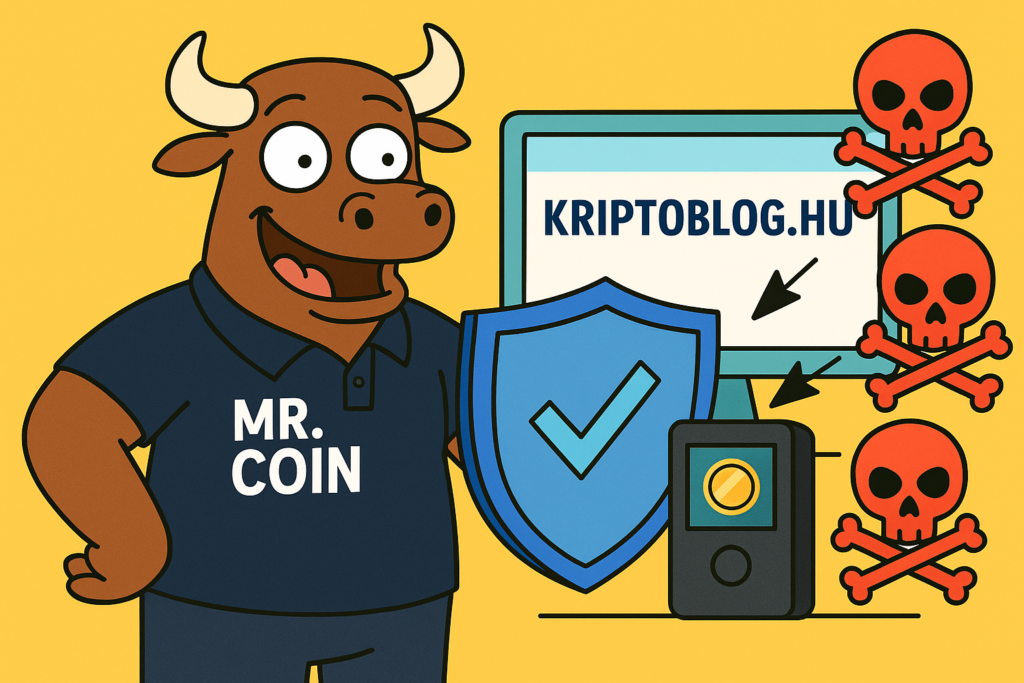
Why does wallet security matter?
In the world of cryptocurrencies, there's no customer service, no "forgot password" button, and no bank to give you back your stolen money. You are your own bank – and this is simultaneously crypto's greatest advantage and greatest risk. In 2026, when Bitcoin and other crypto assets are at historic highs, wallet security is more important than ever.
Considering that the value of cryptocurrencies is continuously growing, they become increasingly large targets for hackers. That's why I'd like to draw attention to the fact that a lack of wallet security can cause serious financial losses. It's worth considering what type of wallet we use, as different types offer different advantages and risks.
Wallet types
Hot Wallet
Internet-connected wallets:
- Mobile wallets: Trust Wallet, Coinbase Wallet, MetaMask Mobile, BlueWallet
- Browser extensions: MetaMask, Phantom, Rabby
- Desktop wallets: Electrum, Exodus, Sparrow
- Exchange wallet: Crypto held in your Binance, Coinbase, Kraken account
Advantages: Quick access, convenient, ideal for everyday transactions
Disadvantages: More vulnerable to hacks, malware, and phishing
I think hot wallets are ideal for those who frequently make transactions and don't hold large amounts in these wallets. However, it's worth paying attention to security measures such as using two-factor authentication (2FA) and regular software updates.
Cold Wallet
Offline storage solutions:
- Hardware wallets: Ledger (Nano S Plus, Nano X, Stax), Trezor (Model T, Safe 3), BitBox02, Keystone
- Paper wallet: Private key printed on paper (outdated, not recommended)
- Air-gapped wallet: Wallet running on a completely offline computer or device (e.g., Keystone, AirGap)
- Steel backup: Seed phrase engraved in steel plate (fire and water resistant)
Advantages: Maximum security, private key never goes online
Disadvantages: Slower access, risk of physical loss, cost (80-300 USD)
I think cold wallets are the best solution for those looking for long-term storage, as these wallets provide maximum security. However, it's worth paying attention to safe storage to avoid physical damage or loss.
Which One Should You Choose?
The answer: bothfor different purposes:
- Hot wallet: For everyday transactions, small amounts – like your physical wallet
- Cold wallet: For long-term storage, larger amounts – like your safe
- Ratios: General rule: your crypto assets' 80-90%in cold storage, 10-20%in hot wallet
It's worth considering using both types of wallets for the secure storage of crypto assets. Hot wallets are convenient for everyday use, while cold wallets provide long-term security.
The seed phrase: the only thing that matters
A seed phrase (recovery phrase, mnemonic) is usually 12 or 24 wordsthat enables the complete restoration of the wallet. This is the most important thing in crypto security:
NEVER do this
- ❌ Don't photograph it
- ❌ Don't store it digitally (cloud, email, Notes app)
- ❌ Don't share it with anyone
- ❌ Don't enter it on any website (100% scam)
- ❌ Don't store it in a single location
Best practices
- ✅ Write it down by hand on paper (two copies)
- ✅ Store in steel plate (Cryptosteel, Billfodl) – fire and water resistant
- ✅ Keep in separate physical locations (e.g., home + safe)
- ✅ Consider using Shamir Backup (Trezor) – splitting the seed phrase, where M out of N pieces are needed for recovery
Considering that the seed phrase is the most important element of crypto security, it's worth considering these
Multisig: the professional solution
A multisignature (multisig) wallet requires multiple private keys to approve transactions:
- 2-of-3: 2 out of 3 keys needed for signing – one can be lost
- 3-of-5: Greater security, more redundancy
- Solutions: Unchained, Casa, Sparrow Wallet, Caravan (Bitcoin-specific)
Multisig is the best balance between security and accessibility for large amounts. If you store larger crypto assets, it's worth considering
The most common attack vectors
1. Phishing
- Fake websites that mimic the login pages of Ledger, MetaMask, etc.
- Fake emails: "Your Ledger has been compromised, enter your seed phrase"
- Protection: NEVER enter your seed phrase online. Ledger, Trezor will never ask for it.
2. Approval exploits
- You give infinite token approval to a malicious smart contract
- Protection: Use Revoke.cash – regularly check and revoke unnecessary approvals
3. Clipboard malware
- The attacker replaces the wallet address copied to your clipboard with their own
- Protection: Always verify the first and last 4-6 characters of the address before sending
4. SIM-swap attack
- The attacker takes over your phone number – gaining access to accounts protected by SMS 2FA
- Protection: Use hardware-based 2FA (YubiKey) instead of SMS
Knowing the most common attack vectors can help prevent the theft of crypto assets. It's worth paying attention to these
2026 trends
- Account Abstraction (ERC-4337): Social recovery, gasless transactions, session keys – the wallet UX revolution
- Passkey wallets: Wallets that work with biometric authentication (face recognition, fingerprint)
- MPC wallets: Multi-Party Computation – the private key never assembles in a single location
The technological development of crypto wallets continues into 2026, and these new trends can improve the user experience
In Conclusion
Wallet security is not optional – it's your responsibility. The following checklist is mandatory for every crypto user:
- ✅ Hardware wallet for main assets
- ✅ Seed phrase offline, in a secure location, at least 2 copies
- ✅ 2FA on every exchange account (YubiKey, not SMS)
- ✅ Regular approval checks (revoke.cash)
- ✅ Double-checking addresses before every transaction
The best investment strategy is worthless if someone steals your crypto. Security is not a cost – it's insurance.
Sources
- CoinDesk: What Are Cryptocurrency Wallets?
- CoinTelegraph: Cryptocurrency Wallets: How Do They Work?
- Investopedia: What Is a Hardware Wallet?
- Ledger: What Is a Seed Phrase?
- Kraken: What is a Multisig Wallet?
⚠️ Legal disclaimer: This article is for informational purposes only and does not constitute investment advice. All investment decisions are made at your own risk.


Comments
Share your view: questions, corrections, and counterpoints are welcome. Comments are for constructive, useful discussion.