 blog
blog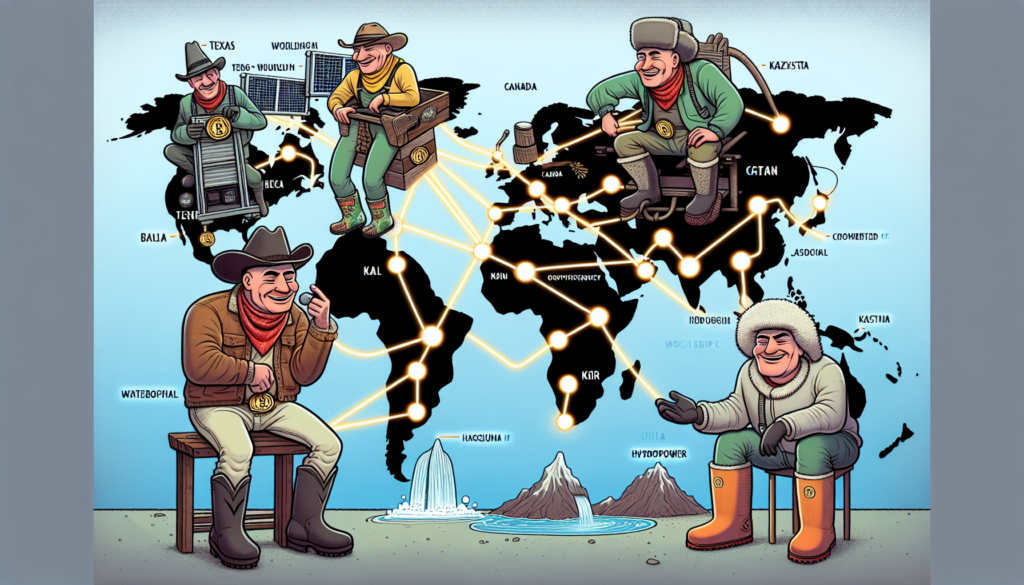
Where Are the World's Bitcoins Being Mined?
Bitcoin mining is a global industrythat operates at the intersection of cheap energy and favorable regulation. Since the 2021 Chinese ban, the geography of mining has dramatically transformed. Let's see what the map looks like in 2026!
The Great Reshuffling: After China
Before 2021, China provided ~65% of Bitcoin's hash rate. After the Chinese government's ban, miners scattered across the globe — making the network more decentralized in the process.
Top Mining Countries in 2026
🇺🇸 United States (~35-40%)
The USA became the world's largest Bitcoin mining nation:
- Texas: The most popular state due to its liberal energy market, cheap wind and solar energy, and mining-friendly policies
- Georgia, New York, Kentucky: Also significant mining capacity
- A RIOT Platforms, Marathon Digital, CleanSpark are all Texas-based, publicly traded mining companies
- Trump administration's supportive stance: considers mining a strategic industry
🇰🇿 Kazakhstan (~8-10%)
- Was the number one destination for Chinese miners in 2021
- Cheap coal energy – but with it comes environmental concerns
- Mining tax and energy restrictions introduced in 2022 reduced its attractiveness
- The government fluctuates between support and restriction
🇷🇺 Russia (~5-8%)
- Cheap energy (gas, hydropower) – especially in Siberia
- Legalized mining within regulated frameworks in 2024
- Due to sanctions, mining is a potential foreign currency acquisition channel
🇨🇦 Canada (~6-8%)
- Québec and Alberta: Cheap hydropower and wind energy
- Cold climate: natural cooling, lower operating costs
- Regulatory stability — attractive for long-term investments
🇪🇹 Ethiopia (growing)
Surprising newcomer:
- A Grand Ethiopian Renaissance Dam (GERD) provides massive, cheap hydroelectric capacity
- Several Chinese mining companies have settled here
- Energy prices are among the world's lowest
🇵🇾 Paraguay
- The Itaipú Dam (one of the world's largest hydroelectric plants) produces surplus energy
- The government actively attracts miners
- One of Latin America's cheapest energy sources
The Impact of the 2024 Halving on Geography
The block reward halving performs a natural selection :
- The least efficient miners drop out — especially where energy is expensive
- Mining gravitates toward cheap and/or renewable energy sources
- More efficient ASIC machines (Antminer S21, Whatsminer M60) have an advantage
New Trends
Nuclear Mining
Several mining companies are exploring the use of small modular reactors (SMR) :
- 24/7 uptime, weather-independent
- Zero carbon emissions
- High initial investment, but low operating costs
Offshore and Mobile Mining
- Containerized mining: Mobile mining units in standard shipping containers — deployable anywhere
- Flare gas mining: Using excess gas at oil wells to power mining machines
- Offshore platforms: Experimental projects for offshore mining
The Question of Hash Rate Centralization
While mining is geographically more decentralized than during the Chinese era, other centralization concerns arise:
- A mining pool concentration: Foundry USA and AntPool together provide ~50% of the hash rate
- The ASIC manufacturer concentration: Bitmain's dominance remains unquestionable
- A publicly traded mining companies' growing market share
In Conclusion
The geography of Bitcoin mining in 2026 much more diversifiedthan ever before. The USA dominates, but Latin America, Africa, and Central Asia play a growing role. The common denominator: cheap, preferably renewable energy.
Bitcoin mining always goes where energy is cheapest – and paradoxically monetizes humanity's most remote and least utilized energy sources.
⚠️ Legal disclaimer: This article is for informational purposes only and does not constitute investment advice. All investment decisions are made at your own risk.







Comments
Share your view: questions, corrections, and counterpoints are welcome. Comments are for constructive, useful discussion.