 blog
blog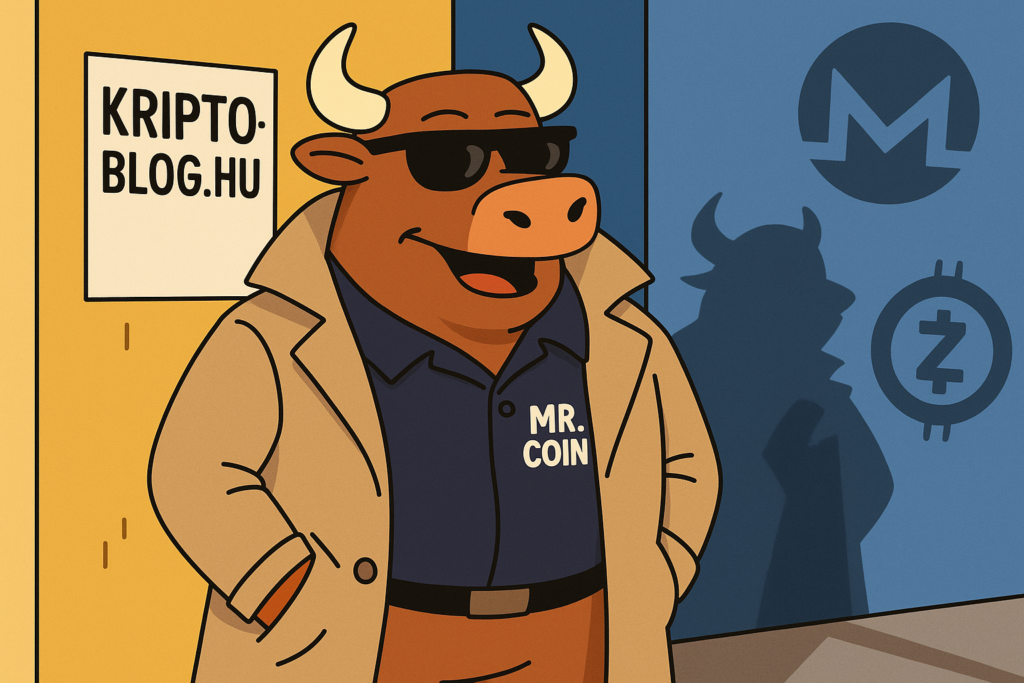
The Price of Financial Privacy
If we consider that most cryptocurrencies – including Bitcoin – are pseudonymous, then the role of privacy coins is particularly interesting. Transactions are public, so chain analysis companies like Chainalysis and Elliptic are increasingly effective at linking wallet addresses to real people. In contrast, privacy coins, such as Monero (XMR) and Zcash (ZEC), aim to preserve financial anonymity. But why does this bother regulators so much?
The Three Major Privacy Coins
Monero (XMR)
Monero is perhaps the most well-known and widely used privacy coin, which employs several technological innovations to ensure transactions remain truly private:
- Ring signatures: This technology mixes the transaction sender among multiple possible senders, making it impossible to determine who the real sender is.
- Stealth addresses: Generates a unique, one-time address for each transaction, so the recipient's real address remains hidden.
- RingCT (Ring Confidential Transactions): The amount is also hidden, so neither the sender, the recipient, nor the amount is visible from the outside.
- Default privacy: Every transaction is automatically private, with no optional "transparent" mode, which I think is worth considering for anyone sensitive about privacy.
Zcash (ZEC)
Zcash takes a different approach in the world of privacy coins:
- zk-SNARKs: These are zero-knowledge proofs that mathematically prove a transaction is valid without revealing any details.
- Optional privacy: Users can choose between transparent (t-address) and shielded (z-address) transactions. This flexibility can be particularly attractive for those who occasionally want to maintain anonymity.
- In practice, however, the majority of transactions are transparent, so the proportion of shielded transactions is low, raising questions about the actual demand for privacy.
Other Privacy Solutions
- Firo (FIRO): Uses the Leloir protocol to anonymize transactions.
- Secret Network (SCRT): A privacy-focused smart contract platform that opens new possibilities in the world of smart contracts.
- Tornado Cash: A mixer operating on the Ethereum network that was placed on the OFAC sanctions list in 2022, sparking serious debates about the legality of privacy tools.
The Regulatory War
Exchange Delisting
In recent years, more and more crypto exchanges have decided to delist privacy coins, which I think is clearly a sign of regulatory pressure:
- Binance: Delisted Monero in several countries, including France, Spain, Italy, and Poland.
- Kraken: Discontinued XMR trading in Belgium and Australia.
- OKX, Huobi: Also restricted access to privacy coins, suggesting regulators are acting in a coordinated manner globally.
- Japan: A complete ban on privacy coins has been in effect here since 2018, which may foreshadow future steps by other countries.
The Tornado Cash Case
In 2022, the US Treasury Department (OFAC) placed the Tornado Cash smart contract on the sanctions list, which was an unprecedented case in the crypto world:
- This was the first time that software code was sanctioned, raising serious questions about software freedom.
- The developer, Alexey Pertsev, was arrested and convicted in the Netherlands, sparking further debates about developer responsibility.
- At the center of debates was whether an open-source tool can be declared illegal, touching fundamental questions of technological freedom.
- In 2024, a US court partially ruled in favor of Tornado Cash, questioning OFAC's jurisdiction over smart contracts, setting a new precedent for examining regulatory frameworks.
Why Do Privacy Coins Matter?
Legitimate Use Cases
- Financial privacy: Many people don't want their boss, neighbor, or even ex-partner to see their financial transactions. Can you relate?
- Business secrets: It's important for companies that competitors can't see their payment habits, as this could provide strategic advantages.
- Oppressive regimes: Financial anonymity is vital for activists, journalists, and dissidents to avoid retaliation.
- Fungibility: If every Bitcoin is traceable, some "tainted" (e.g., darknet-used) coins may be rejected, undermining money's fungibility – its equal exchangeability.
Illegitimate Use
- Monero is a darknet markets' preferred payment method, which is why regulators pay particular attention.
- A significant portion of ransomware payments are made in Monero, which is one way criminal activities are financed.
- Money laundering: Although according to Chainalysis, crypto crime represents less than 1% of all crypto volume, the use of privacy coins still raises this concern.
Bitcoin Privacy Evolution
Besides privacy coins, Bitcoin has also made significant strides in privacy protection:
- Taproot (2021): This upgrade improved transaction privacy and efficiency, opening new possibilities for users.
- CoinJoin (Wasabi Wallet, JoinMarket): This technique allows mixing transactions among multiple users, increasing anonymity.
- PayJoin: Sender and receiver cooperate to hide the transaction structure, further complicating transaction tracking.
Practical Tips for Using Privacy Coins
If you're considering using privacy coins, it's worth considering some practical tips. First, always make sure your chosen exchange supports privacy coins. Also, it's important to securely store your coins and pay attention to available wallet options that support privacy features. Finally, it's worth following the latest regulatory news to avoid legal issues.
In Conclusion
Privacy coins stand at the intersection of financial freedom and regulatory control , and their future depends on how society draws the line between privacy protection and law enforcement needs. I believe privacy isn't a crime, but privacy tools can be used for crime, and this tension cannot be ignored in the crypto world.
The debate over privacy tools is therefore inevitable, and future regulations may greatly influence the development of the crypto world.
Sources
- CoinDesk: What is Monero (XMR)?
- CoinTelegraph: What is Zcash (ZEC)?
- Investopedia: Privacy Coin
- CoinDesk: What is Tornado Cash?
- CoinDesk: US Court Ruling on Tornado Cash
⚠️ Legal disclaimer: This article is for informational purposes only and does not constitute investment advice. All investment decisions are made at your own risk.




Comments
Share your view: questions, corrections, and counterpoints are welcome. Comments are for constructive, useful discussion.